A Historic Stable Transformed: How GTEC3D Laser Scanning Enabled Perkins & Will's Net-Zero Vision on Bainbridge Island

A remarkable transformation is unfolding on Bainbridge Island, where global architecture firm Perkins&Will has revitalized a 100-year-old former stable into a cutting-edge, sustainable studio. This project is a shining example of adaptive reuse, seamlessly blending historic preservation with modern, deep-green architecture to target the rigorous Living Building Challenge Living Future Core certification (net-zero energy, water, and waste).
 
This innovative approach proves that even the most rundown historical structures can become regenerative assets. The building, once a coal storage facility, is now powered entirely by the sun and serves as a hub for a team dedicated to designing green buildings worldwide.

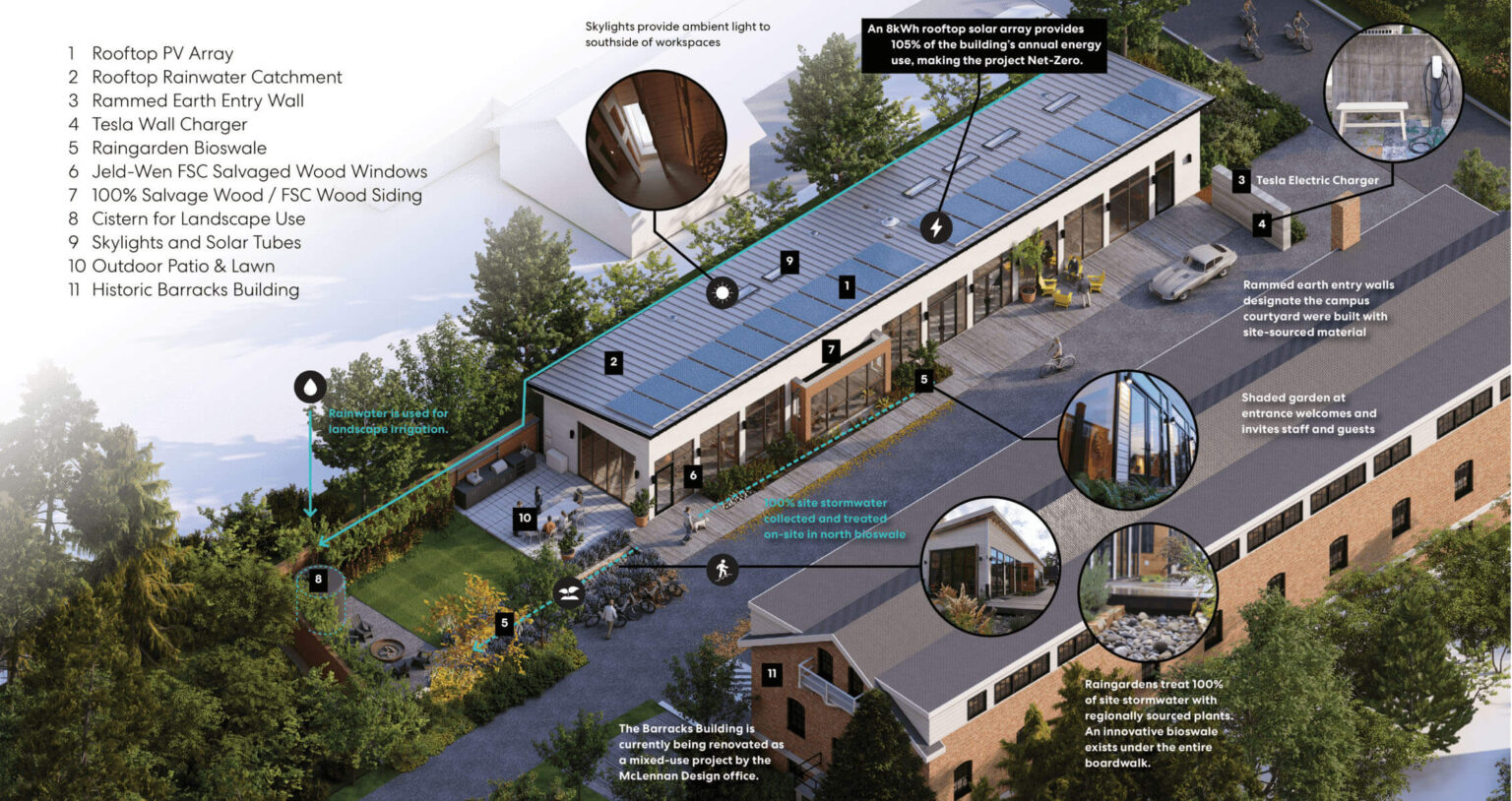
Pre-construction site map for the new Perkins&Will Bainbridge Island office, generated from GTEC3D laser scan data using a Leica RTC360.
This pre-construction site map provides the foundational layout for Perkins&Will's new workspace on Bainbridge Island, derived from high-resolution GTEC3D laser scans.

The Living Building Challenge: A Vision for a Regenerative Future

The Living Building Challenge, developed by the International Living Future Institute, is considered the world’s most rigorous green building standard. Unlike other certifications that often rely on predicted performance, LBC requires projects to demonstrate actual net-zero or net-positive performance over a 12-month operational period. 
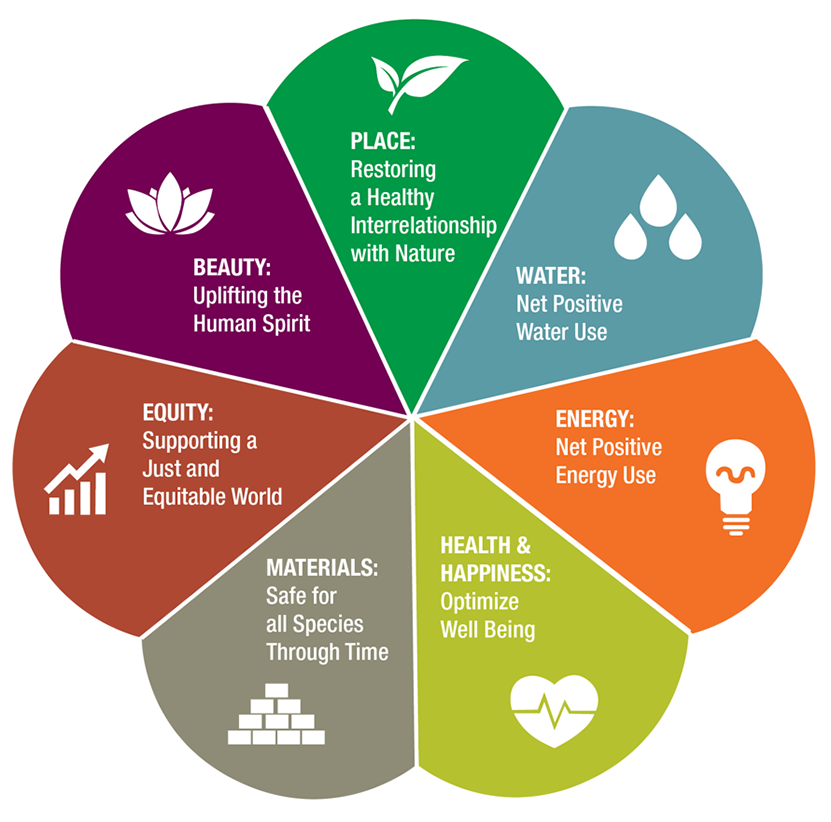
The standard is organized into seven performance areas, known as “Petals,” which function like an actual flower: 
  • Place: Restoring a healthy relationship with nature and avoiding development on pristine land.
  • Water: Creating closed-loop systems that capture and reuse all water on-site.
  • Energy: Achieving net-positive energy, relying only on current solar income.
  • Health + Happiness: Optimizing physical and psychological well-being through design choices.
  • Materials: Using non-toxic materials transparently sourced and free of the “Red List” of harmful chemicals (e.g., PVC, formaldehyde).
  • Equity: Supporting a just and equitable world with universal access.
  • Beauty: Celebrating design that uplifts the human spirit and connects occupants to nature. 
Perkins&Will is specifically targeting the Core certification pathway for their new studio, which requires achieving all 10 fundamental imperatives across these petals. 
LIVING BUILDING CHALLENGE
LIVING BUILDING STANDARDS FEEDBACK LOOP

The Crucial Role of High-Accuracy 3D Laser Scanning

The challenge of transforming an aging structure while preserving its original character required extraordinary precision. This is where high-definition 3D laser scanning became an indispensable tool in the AEC workflow.
GTEC3D was brought in to capture the detailed existing conditions of the stable. Using the state-of-the-art Leica Geosystems RTC360 laser scanner, GTEC3D generated a high-accuracy digital twin of the entire structure.
This millimeter-level accurate data was vital for several reasons:
  • Preserving Historic Elements: The detailed scans ensured the preservation of original elements, such as the 1911 rafters and timber roof trusses, by providing architects with precise measurements to design around.
  • Seamless Integration: High-accuracy data allowed for the seamless implementation of complex modern sustainable systems (like hydronic HVAC and rainwater collection) without compromising the building’s historic integrity.
  • Informed Design Decisions: The digital foundation eliminated guesswork, reduced the need for multiple site visits, and streamlined the design coordination process for the architectural and engineering teams.
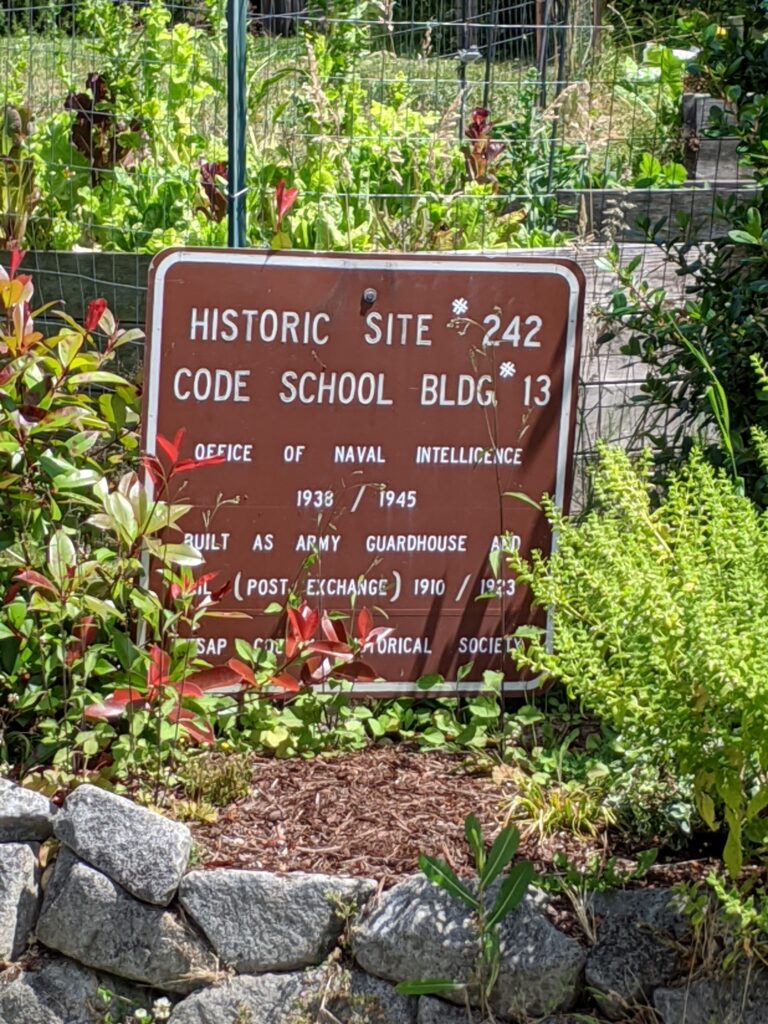
A clear photograph taken with a Nikon ZF camera shows Eric Guizzetti standing next to a weathered historic site informational sign, set against an outdoor, natural background.
Our Reality Tech, Eric Guizzetti, captures the essence of a local landmark using his Nikon ZF. These images help document the historical context of the sites we digitally preserve through laser scanning.
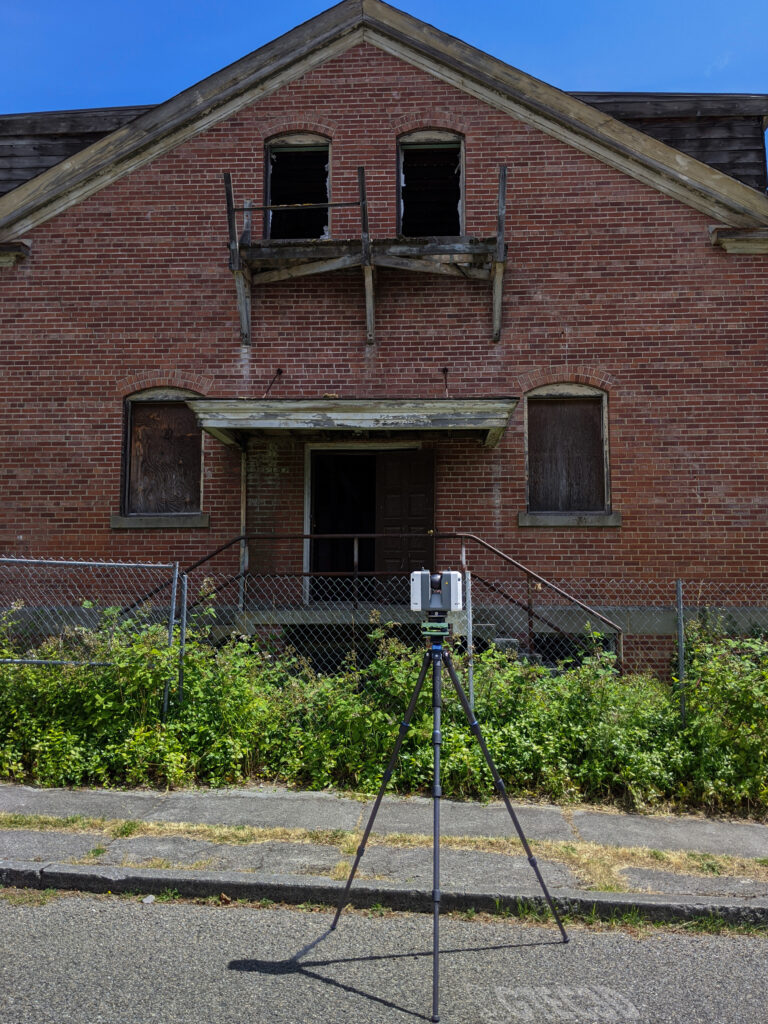
A GTEC3D technician operates a Leica RTC360 3D laser scanner to capture data from the exterior of the historic "Station S" naval listening station building at Fort Ward, Washington.
GTEC3D utilizes advanced 3D laser scanning technology with a Leica RTC360 device to digitally document the exterior of the former Fort Ward Naval Radio Station ("Station S"), a critical WWII top-secret listening post.
A GTEC3D technician operates a tripod-mounted Leica 3D laser scanner inside a historic, empty room at the former Fort Ward Japanese listening center on Bainbridge Island.

An Inspiring Blueprint for the Future

The success of the Perkins&Will Bainbridge Island studio is an inspiration for the entire AEC industry, demonstrating a powerful commitment to climate justice and regenerative design. This project highlights how advanced technology like GTEC3D’s laser scanning services can unlock the potential of existing buildings and accelerate our path toward a sustainable, net-zero future.
We are proud to have played a role in documenting a project that transforms history into a living laboratory for green architecture.
A GTEC3D technician operates a Leica RTC360 3D laser scanner to capture data from the exterior of the historic "Station S" naval listening station building at Fort Ward, Washington.
Discover More About This Groundbreaking Project: