Precision in the Engine Room: 3D Laser Scanning for Maritime EGCS Retrofits

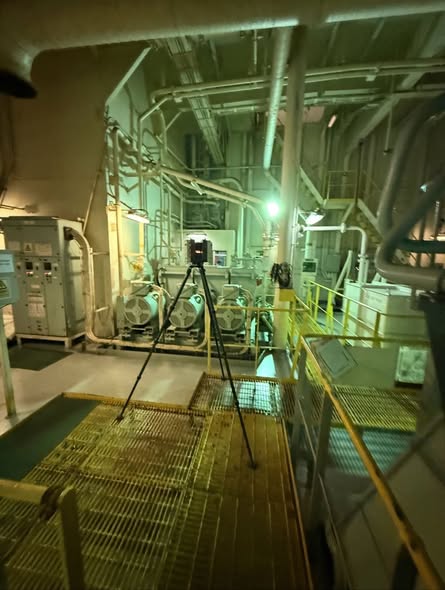
I just wrapped up a 3D laser scanning project onboard a vessel to facilitate an Exhaust Gas Cleaning System (EGCS) replacement. In the maritime industry, where every millimeter counts, capturing precise geometry is the only way to ensure a seamless retrofit design.

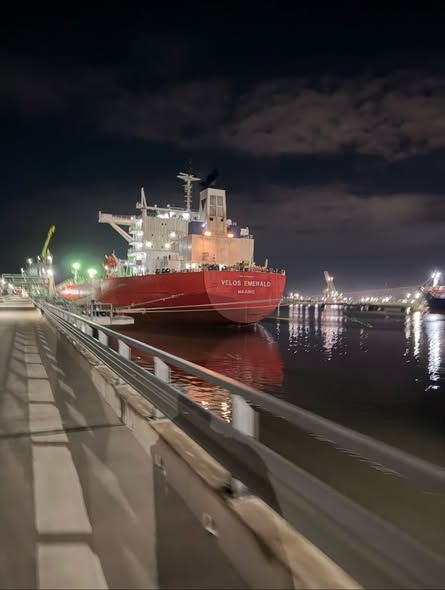
The Velos Emerald (IMO: 9402213) is a 115,042 DWT crude oil tanker managed by Velos Tankers Ltd. Velos Tankers is a Greek ship management company offering global energy transportation services with a specialized fleet. You can read more about their fleet at Velos. 
A detailed 3D point cloud visualization of a ship's engine room, showing a dense network of pipes, machinery, and structural beams in vibrant digital colors. The scan captures the complex internal geometry of the Velos Emerald for engineering design.

The Challenge of Maritime Scanning

Working in an engine room is a unique puzzle. Unlike land-based construction, maritime scanning involves:
 
  • Cramped Spaces: Navigating dense machinery and complex piping requires a strategic scanning plan to avoid “shadows” or missing data.
  • Vibration & Movement: Scanners must contend with constant hull vibrations, making high-speed, millimeter-accurate technology essential for reliable data.
  • Dynamic Environments: From changing temperatures to the ship’s own operational schedule, flexibility is the name of the game.

Why 3D Scanning for Scrubber Retrofits?

EGCS (scrubber) installations are significantly more complex than standard ballast water treatment systems (BWTS) because they require finding large installation footprints within already optimized engine rooms. By using 3D laser scanning, we create a high-fidelity “point cloud” that allows engineers to pre-fabricate pipe spools off-site, reducing expensive shipyard downtime and minimizing field-welding errors.

Legend-Status Hospitality

Technical challenges aside, the highlight of this trip was the incredible Philippine crew. Knowing I’m vegetarian, they went completely out of their way to prepare custom vegetarian pancit (savory stir-fried noodles) and lumpia (crispy spring rolls).
 
In a high-pressure environment, that kind of legendary hospitality makes all the difference. Now, it’s time to take this data back to the office and turn those millions of points into a working design.
 
These resources explain how 3D laser scanning captures precise geometry for maritime retrofits, addressing challenges like cramped spaces and vibration while emphasizing efficiency and accuracy: